

Payment data is the transaction-level information generated every time a customer pays, capturing signals like amount, payment method, authorization outcome, and timing that directly reveal sales performance and customer intent. Understanding how payment data informs sales gives you a commercial intelligence layer that most teams leave untouched. Stripe frames payment analytics as studying data created at every payment event to explain checkout behavior and identify lost revenue. For sales professionals and business analysts, this is not a backend finance concern. It is a live window into demand, friction, and customer health.
How payment data informs sales performance and customer behavior
Payment data analysis for sales starts with knowing which metrics actually matter. Not every transaction signal carries equal weight, and confusing the wrong numbers leads to bad decisions.
Authorization rate is the percentage of payment attempts that succeed. A 1% improvement in authorization rate can recover millions in annual revenue for large businesses. That single number tells you whether your revenue problem is a demand problem or a payment friction problem. Those are two very different fixes.

Transaction volume and value reveal sales trends over time. A spike in transaction volume on a Tuesday afternoon tells you something about your customers that a monthly sales report never will. Combine that with payment method data and you start to see customer segments: credit card users often behave differently from buy-now-pay-later users in terms of average order value and return rates.
Decline rates and failure patterns expose revenue leaks that never show up in your CRM. A customer who tried to buy three times and failed is not a lost lead. They are a motivated buyer blocked by a technical or financial barrier. Treating that as a sales signal, not a payment operations issue, changes how your team responds.
Here is a quick reference for the metrics that matter most:
| Metric | What it signals for sales |
|---|---|
| Authorization rate | Ratio of demand to payment friction; low rates indicate checkout or card issues |
| Decline rate | Volume of motivated buyers blocked before purchase completion |
| Transaction frequency | Engagement depth and repeat purchase behavior by segment |
| Payment method mix | Customer segment preferences and average order value patterns |
| Chargeback rate | Post-sale dissatisfaction and potential product or fulfillment issues |
| Settlement lag | Cash flow timing and the gap between orders and confirmed revenue |
Pro Tip: Track authorization rates by payment method separately. A low rate on credit cards and a high rate on digital wallets like Apple Pay or Google Pay tells you the friction is card-specific, not a product or pricing issue.
Does real-time payment data improve sales forecasting?
Traditional sales reporting looks backward. You close the month, pull the numbers, and make decisions based on what already happened. Transaction data provides near real-time operational insight that shows current patterns and enables faster decisions, including rapid promotion testing and identifying peak sales periods as they happen.
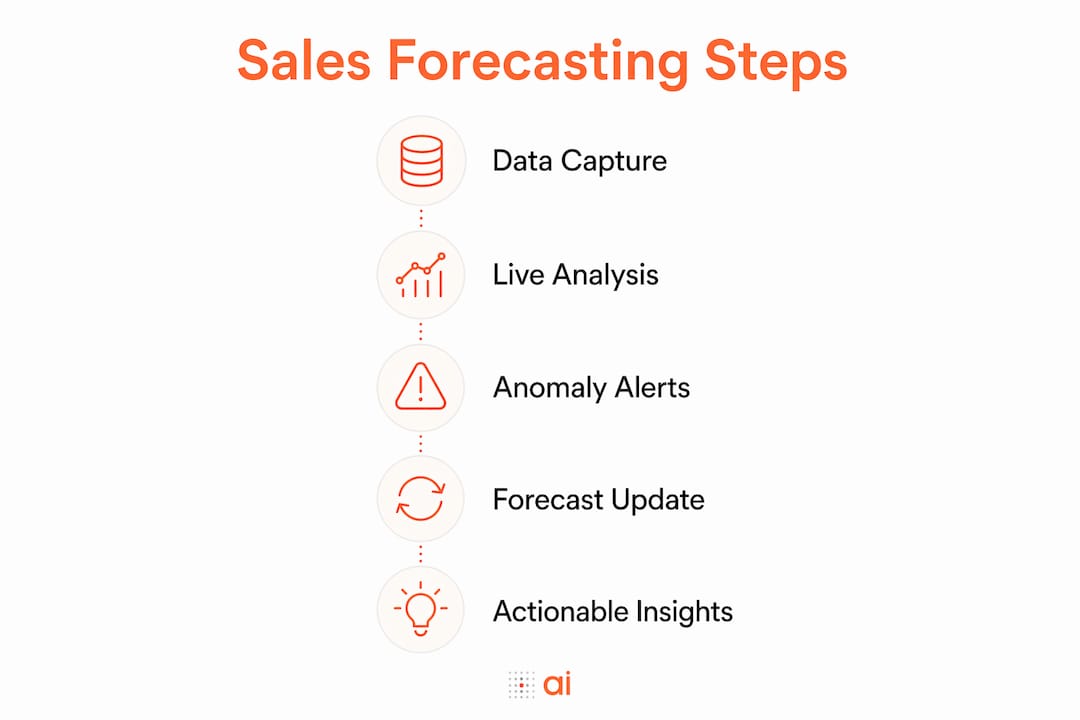
The practical difference is significant. Finance and sales teams using live payment event feeds can spot a chargeback spike on day three of a campaign rather than day thirty. They can see that a promotional discount is driving volume but not settled revenue, because refund rates are climbing in parallel. Real-time analytics narrow the window between a variance appearing and a corrective action being taken.
Forecasts that treat payment events as continuously updating signals reduce forecast drift by refreshing with each new payment or dispute. This is a structural improvement over static monthly models. The table below summarizes the operational advantages:
| Forecasting approach | Lag time | Anomaly detection | Actionable lead time |
|---|---|---|---|
| Monthly sales report | 30+ days | Post-period only | Minimal |
| Weekly CRM pipeline review | 7 days | Limited | Moderate |
| Live payment event feed | Minutes to hours | Real-time | High |
For staffing, inventory, and promotion decisions, that lead time difference is the gap between reacting and planning. A retailer who sees transaction volume climbing on a specific product category at 2 PM can adjust staffing or trigger a restock alert before the shelf goes empty. A SaaS company that spots a drop in renewal payment attempts on day one of the billing cycle can trigger a retention outreach before the customer churns silently.
Pro Tip: Set automated alerts on authorization rate drops greater than 2% within any 24-hour window. That threshold catches real anomalies without generating noise from normal daily variation.
How to integrate payment data with CRM for deeper sales intelligence
Pairing payment outcomes with your CRM and commercial pipeline data is where the impact of payment data on sales becomes genuinely predictive. Payment data alone tells you what happened at the transaction level. CRM data tells you the relationship context. Together, they tell you what is likely to happen next.
CFOs and sales leaders use AI on combined payment and pipeline signals to forecast revenue months earlier than traditional methods allow. The signals they watch include invoice timing shifts, order frequency changes, and credit utilization patterns. In B2B sales specifically, these are early indicators of account health that appear well before a customer mentions a contract renegotiation.
Here are the predictive signals worth building into your account management workflow:
- Payment cycle extensions: An account that consistently paid in 15 days now taking 45 days is signaling cash pressure or reduced commitment. This is a retention risk that your CRM will not flag on its own.
- Order size reduction: Smaller, more frequent orders from a previously high-value account can indicate budget constraints or competitive displacement.
- Increased exception requests: Accounts requesting payment holds, partial payments, or custom billing terms more often than usual are showing friction that deserves a sales conversation.
- Card type changes: A B2C customer switching from a premium credit card to a prepaid card may signal financial stress and elevated churn risk.
- Lapsed payment methods: Failed card updates on subscription accounts are a leading indicator of involuntary churn, not just a billing operations issue.
A critical execution pitfall to avoid: confusing gross checkout success with settled revenue leads to overstating campaign profitability. An order that clears checkout but results in a refund or chargeback is not a sale. Your CRM data quality directly affects how cleanly payment outcomes map to pipeline records, so that integration layer deserves serious attention.
For teams building this integration, data-connected apps that pull from both payment processors like Stripe and CRM platforms like HubSpot give you a single view without manual data handling.
Using payment data to reduce churn and increase customer lifetime value
Payment signals are one of the most underused retention tools available to sales and customer success teams. Payment frequency and method data support targeted retention actions that reduce churn and increase customer lifetime value when acted on quickly.
The retention workflow built on payment data looks like this:
- Monitor payment failure rates by customer segment. A 5% failure rate across your entire base masks a 20% failure rate in one segment. Segment-level visibility tells you where to focus retention resources.
- Trigger outreach on first payment failure. Waiting for a second or third failure before contacting a customer loses days of recovery time. Automated alerts tied to payment events let your team respond within hours.
- Deploy card updater services. Automatic card updater programs, available through processors like Stripe and Braintree, refresh expired or replaced card details without customer action. This eliminates a large share of involuntary churn before it starts.
- Use retry logic strategically. Retrying a failed payment immediately often fails again for the same reason. Spacing retries across different times of day and days of the week improves recovery rates meaningfully.
- Personalize loyalty outreach by payment behavior. Customers who pay early, use premium cards, and increase transaction frequency are your highest-value segment. Treat them differently from customers showing declining engagement signals.
Compliance and responsible data use are the foundation of any payment-based retention program. Customers trust you with financial data. Using it to serve them better builds that trust. Using it in ways that feel intrusive destroys it. Keep your data use transparent and tied directly to improving their experience.
Pro Tip: Build a simple payment health score for each account: combine authorization rate, payment frequency trend, and days-to-pay into a single number. Accounts with declining scores get proactive outreach before they show up as churned in your CRM.
Key takeaways
Payment data informs sales most powerfully when authorization rates, transaction patterns, and payment failures are treated as commercial intent signals rather than backend metrics, and when that data is integrated with CRM and pipeline records for predictive account management.
| Point | Details |
|---|---|
| Authorization rate as a sales signal | A 1% improvement can recover millions in revenue; low rates reveal friction, not weak demand. |
| Real-time data beats monthly reports | Live payment feeds enable same-day anomaly detection and faster operational decisions. |
| CRM integration unlocks prediction | Combining payment outcomes with pipeline data surfaces account health signals weeks earlier. |
| Payment failures drive silent churn | Monitoring declines and deploying card updater services prevents involuntary customer loss. |
| Settled revenue, not gross orders | Distinguishing confirmed revenue from checkout starts prevents overstating campaign performance. |
Why most sales teams are sitting on a gold mine they never open
I have spent years watching sales teams obsess over pipeline coverage ratios and conversion rates while their payment data sits completely untouched in a Stripe dashboard nobody logs into. The frustration is real, and it is fixable.
The insight that changed how I think about this: payment success and authorization rates are commercial intent signals, not just backend metrics. When a customer attempts a payment and fails, that is not a billing problem. That is a motivated buyer you have not yet served. The sales team should know about it within the hour, not at the end-of-month review.
That said, I want to be honest about the limits here. Payment data improves sales indirectly, primarily through better payment outcomes, and it does not replace core commercial data. I have seen teams get excited about payment analytics and start attributing all their revenue problems to authorization rates when the real issue was product-market fit or pricing. Payment data is one lens, not the whole picture.
The practical starting point for most sales professionals is simpler than it sounds. Pull your authorization rate by customer segment this week. Compare payment frequency trends for your top 20 accounts against the same period last year. Look for accounts where days-to-pay has extended by more than 30%. Those three exercises will surface more actionable intelligence than most quarterly business reviews produce.
The teams winning with real-time data processing are not doing anything exotic. They connected their payment processor to their CRM, built a simple dashboard, and started treating payment events as sales events. That shift in perspective is the whole game.
— Rickard
How Gainable helps you turn payment data into sales intelligence
If you recognize the opportunity in payment data but feel stuck on the "how do I actually connect all this" part, that is exactly the problem Gainable was built to solve.
Gainable connects directly to Stripe, HubSpot, and other data sources and auto-generates apps built around your specific workflows, with no coding required. You can build a live sales pipeline app that surfaces payment health scores, authorization trends, and CRM signals in one place, and refine it through plain-language queries as your needs change. The automation copilot drafts actions based on the data trends it observes, so your team spends time on decisions, not on data wrangling. Payment data analysis for sales does not have to mean a six-month data engineering project.
FAQ
What is payment data in a sales context?
Payment data is the transaction-level information generated at every payment event, including amount, method, authorization outcome, and timing. Sales teams use it to identify revenue leaks, understand customer behavior, and improve forecasting accuracy.
How does payment data affect sales performance?
Payment analytics reveal checkout behavior and lost revenue by showing where and why transactions fail. Improving authorization rates and reducing declines directly increases the volume of completed sales from existing demand.
Can payment data predict customer churn?
Yes. In B2B accounts, extending payment cycles and smaller order sizes signal changing account health well before a customer raises a concern. In B2C, failed payment attempts and card type changes are leading indicators of involuntary churn.
What is the difference between gross checkout success and settled revenue?
Gross checkout success counts orders that clear the checkout process. Settled revenue counts only transactions that are confirmed, net of refunds and chargebacks. Confusing the two overstates campaign profitability and leads to poor sales decisions.
How do I start using payment data to boost sales without a data team?
Connect your payment processor and CRM to a platform that unifies both sources automatically. Start by tracking authorization rates by segment, monitoring payment frequency trends for key accounts, and setting alerts on decline rate spikes. These three steps require no custom engineering and deliver immediate visibility into your revenue performance.